Proper positioning for the prevention of pressure injuries
Elders who are confined to bed or wheelchair may develop complications due to decreased mobility of the limbs; for example, chest infection, pressure injuries (or decubitus ulcer) and muscle contracture. All these complications are related to improper positioning. Caregivers can improve their nursing skills and assist elders in changing their positions regularly to minimise their risk of developing these complications.
I. Pressure injuries:
Pressure injury is defined as localised damage to the skin and/or underlying tissue, as a result of pressure or pressure in combination with shear. Pressure injuries usually occur over a bony prominence but may also related to a medical device or other object. When localised parts of the body are under continuous pressure, blood supply to that area is hindered and a pressure injury develop as a consequence.
- High risk patients:
Chronically ill and bedridden
Urinary or faecal incontinent
Overweight or underweight
- Common sites:
| Prone position | Lying position |
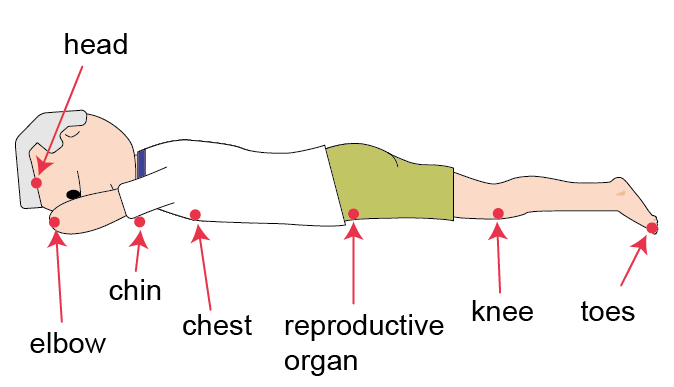 |
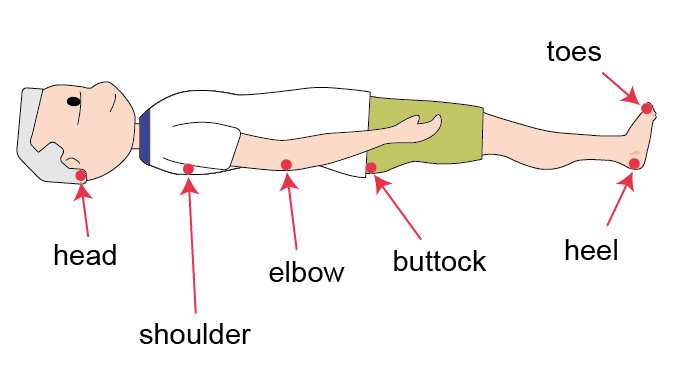 |
| Lateral position | Sitting position |
 |
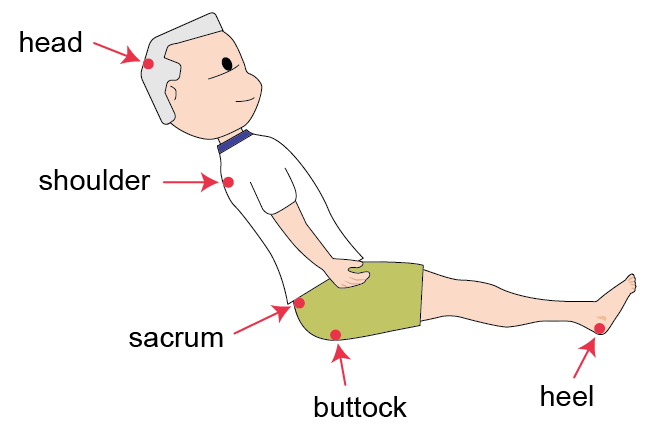 |
- Prevention of pressure injuries:
Reduce localised pressure
- Adopt proper positioning to minimise pressure over bony prominences.
- Change positions frequently and turn every 2 hours.
- Avoid friction between the body and the bed during lifting and transfer of the elderly.
- Choose the suitable type of chair and teach a chair-bound elder, if possible, to change posture every 30 min with the help of their upper limbs.
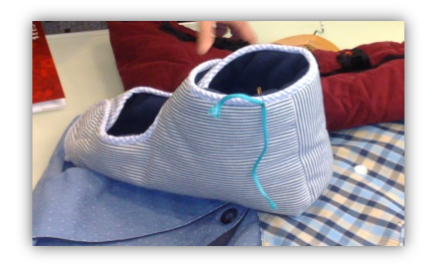
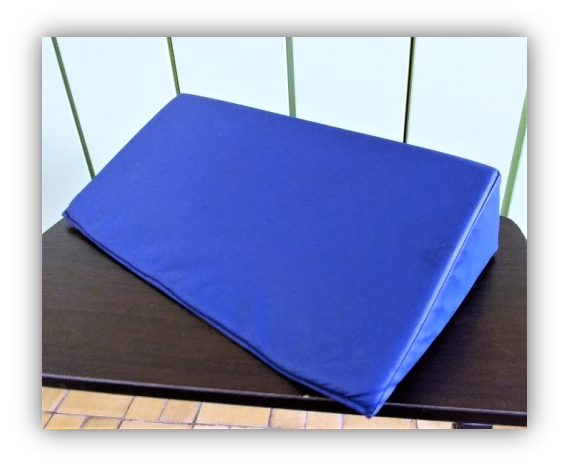
- Consult health professionals regarding use of pressure-relieving devices, e.g.
 |
 |
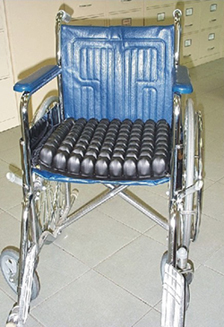 |
| Heel protector | Wedge pillow | Air mattress |
Other measures
- Keep clothing and bed linen clean and dry.
- Avoid placing heavy objects (e.g. hot-water bottle and beddings) over the body.
- Wound dressings or bandages should not be too tight.
- Carers should keep their nails short and avoid wearing jewellery that may cause injury to the elder's skin.
Personal hygiene
- Keep skin clean and dry; change napkins frequently to decrease risk of skin infection in elders who suffer from incontinence.
- Pay attention to the skin condition and check for signs of pressure injuries, seek medical advice when necessary.
Balanced diet
- Maintain a nutritious and high protein diet e.g. meat, eggs, milk and beans to keep skin healthy.
II. Muscle contracture
Muscle contracture is the result of prolonged immobility and improper positioning leading to joint stiffness and decreased range of movement (especially in patients with Stroke, Parkinson’s disease or those who are bedridden).
Prevention of muscle contracture
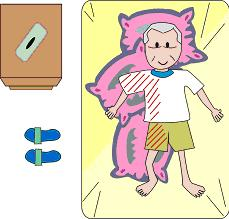
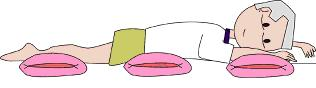
Adopt proper positioning and change positions every two hours
Lying |
 |
|
|
Prone position |
 |
|
|
Lateral position |
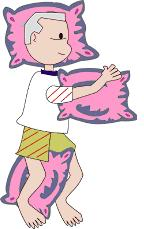 |
|
|
Sitting |
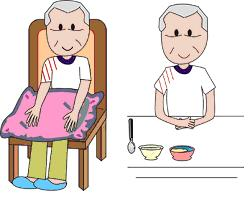 |
|
- Exercise
Caregivers should encourage and assist elders in performing regular active or passive stretching exercise in order to maintain good circulation, joint flexibility, and prevent muscle contracture.
- Others
- Use firm pillow with a suitable thickness of approximately 5 cm to 10 cm.
- Use firm mattress to provide adequate support.
- Choose wheelchair with back and neck rests.
- Choice of chair:
- the width of seat = width of pelvis + 5cm;
- the height of seat = 39cm to 50cm;
- the depth of seat = the length of client’s thigh – 5cm;
- the seat should be firm and well supported.
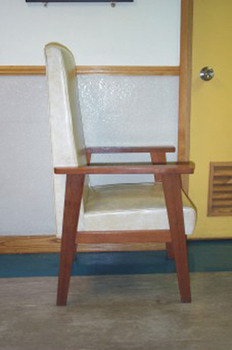 |
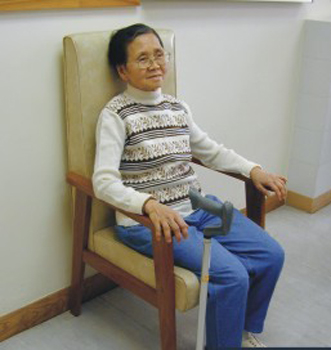 |
| A suitable chair | |