When assisting the elders in getting up from bed, transferring to the wheelchair or toileting, improper techniques can cause injury. Caregivers need to apply proper skills of 'Lifting and Transfer' so as to avoid repetitive strain injury, instill a sense of security in the elder, and ensure smooth and safe transfer.
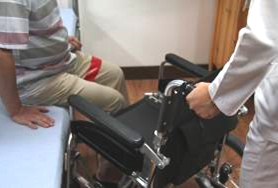
Prepare in advance:
Principle 1- Plan ahead and be prepared:
- To adopt an appropriate lifting or transfer method after understanding the condition and ability of the elder
- To ensure a safe environment for transfer
- To prepare and secure the equipment, such as proper orientation of chair or wheelchair, and locking of the wheelchair
Principle 2 – Explain to the elder and give guidance to seek co-operation
- To gain the elder's co-operation and participation by explaining the procedures
|
 |
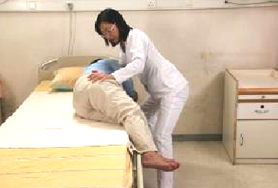
Keep your back straight and tighten your abdomen:
Principle 3 - Maintain correct posture
- To protect the back by keeping the back straight and tightening the abdominal muscles
- To stand with feet apart and knees bent
|  |
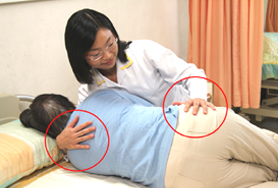
Firm handhold and get as close to the elder as possible:
Principle 4 – Hold firmly
- To enhance safety and provide a sense of security by holding the elder firmly
Principle 5 – Stay close to the elder
- To keep the elder as close as possible for protecting your back
|  |
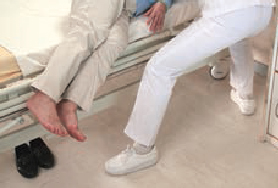
Stand firmly and propel correctly:
Principle 6 – Point one foot towards the destination and lift with the strength of lower limbs
- To facilitate proper weight shifting by pointing one foot at the destination
- To propel with your legs for reducing strain on your back
|  |
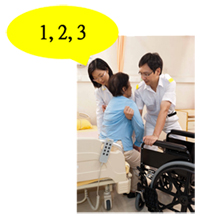
Definite commands:
Principle 7 – One carer gives command
- To decrease strain and injury by seeking help from others, e.g. family members, colleagues etc. when necessary
- To facilitate coordination and prevent injury among carers, assign only one carer to give command
|  |
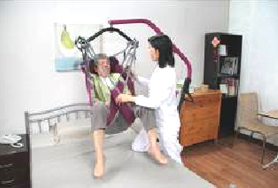
Don't strain yourself:
Principle 8 – Use assistive devices
- To decrease strain and injury by using lifting and transfer aids appropriately
|  |
Remember the above tips and apply them appropriately in different environments and situations so that safety of both the elderly and caregivers can be ensured. In case of any doubt or difficulty in applying the 'Lifting and Transfer' skills or related devices, please consult a physiotherapist or other health care professional for advice.