Feeding skills for carers of frail elderly
Elderly persons with chronic illnesses and frailty may decrease the ability for self feeding. Carers should provide appropriate assistance according to elderly persons' individual needs in order to boost the elderly persons' confidence in self feeding. Caring them with more patience and love are especially important for those who are totally feeding-dependent allowing them to continue to benefit from the joy of eating.
Online videos: Facilitating oral feeding of the elderly persons with swallowing and hand movement difficulty
Objectives:
- To maintain a healthy diet and balanced nutrition
- To prevent complications such as aspiration pneumonia induced by choking
- To encourage or assist elderly persons with eating problems to reduce chronic dependence, hoping to resume partial or total self care ability and enhance their autonomy
- To make eating an enjoyable experience and improve their quality of life
Preparation before Feeding
1. Environment
- Ensure that the dining area is well-ventilated, with adequate lighting. Turn off the television to enhance the elderly persons' concentration on eating
- Maintain a safe, comfortable and tidy environment
- Allow adequate eating time
2. Feeding Utensils
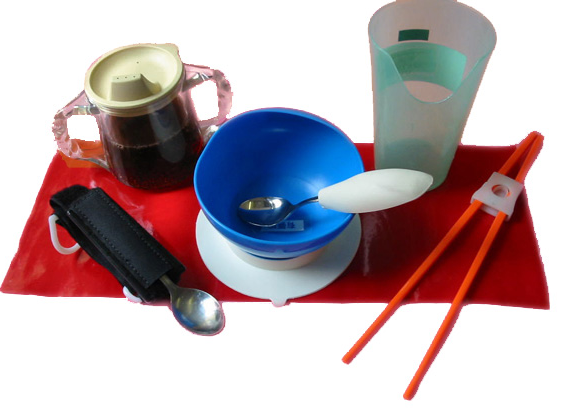
(Fig. 1)
- Ensure the utensils are clean. Use non-slip mat to fix utensils on the table for easier feeding. Check the utensils for proper function and replace any broken items promptly
- Choose appropriate feeding utensils. e.g. fork or spoon instead of chopsticks
- Use smaller spoons to control feeding amount and minimise the risk of choking
- Consult an occupational therapist if necessary for advice on the choice of feeding devices, e.g. spoon with built-up handles, chopsticks adaptor, scooper bowl, nosey cup, two-handled mug, non-slip mat (Fig. 1)
3. The carer
- Explain to the elderly persons about the eating procedure in a warm and caring manner, hoping to gain their understanding and cooperation
- Good personal hygiene should be observed. Perform hand hygiene with liquid soap and water before feeding. Then, assist the elderly persons in hand washing before mealtime
- If needed, perform oral care such as rinsing the mouth before meals to stimulate appetite
- Assess the elderly persons' chewing and swallowing abilities. Provide assistance accordingly
- Communicate with the elderly persons before feeding, e.g. introduce the menu with persons with dementia to enhance their cognition and stimulate their interest. For those with visual impairment, guide them along by informing them the food types and position of the food and utensils. Ensure all food and necessary feeding aids are within their easy reach to enhance their confidence of self feeding
4. Choice of food
- Prepare meal menus in advance according to the health condition of the elderly persons and follow the recommendations of medical staff, dietitians and speech therapists in terms of soft meals, minced meals, pureed meals, liquid meals or portion arrangements
- Pureed meals must be ground. In order to increase the elderly persons' appetite, it is recommended to grind meat, vegetables and grains such as rice and noodles separately and place them in different containers
- Individual's food preference, religion, culture and health status should be considered for meal preparation, e.g. Diabetic, low salt and vegetarian diet etc.
- Choose nutritious food which are easy and safe to swallow. Change menus regularly to stimulate appetite and ensure adequate nutrition
- Prepare food according to individual's chewing and swallowing abilities, e.g. puree, porridge or fluid diet. Remove the bones and skin of meat, and chop up the food / vegetables into smaller pieces for easy chewing and to prevent the risk of choking
- Avoid foods that are too hard in texture, e.g. nuts
- Avoid foods that are too slippery or sticky, e.g. jelly, fish balls, whole piece of grape, sweet/glutinous dumpling
- Avoid foods which crumble easily, e.g. egg rolls
- Avoid foods which change texture upon consumption or are prone to release fluid, e.g. tofu pudding, soup dumplings, and fruits with a high water content. These foods can easily squirt juice when bitten, causing choking in people with poor swallowing abilities due to the fast-flowing liquid
- Avoid giving the elderly persons food or drinks that are too hot as they may scald the mouth and tongue during swallowing
- Hot tea, water and soup should be placed in a safe place to prevent the elderly persons from pouring and causing scald.
5. The elderly persons
- Encourage the elderly persons to eat together at the dining table or in the dining room, which can increase their appetite
- Assist the elderly persons to sit up straight, match with dining table of appropriate height, maintaining a comfortable and correct posture
- Assist the elderly persons to put on apron, put in dentures, hearing aids, and glasses (if applicable)
Safety Tips on Feeding
- Ensure that the elderly persons are fully alert during feeding
- When eating, have the elderly persons tilt their heads slightly downward; this positions the lower jaw downward and reduces the chance of choking.
- Observe the elderly persons during feeding. Provide assistance accordingly
- During the feeding process, do not give too much food or feed too fast at one time. Use a small spoon. Feed the elderly persons only when they finish chewing and swallowing the food. If they refuse to eat, try to find out the reason
- Observe for any signs of swallowing difficulties, e.g. cough, drooling, aspiration of food back into the nose, etc. or need to swallow several times
- Signs and symptoms of choking or aspiration are:
- Continuous coughing
- Unable to speak or having breathing difficulty
- Hands clutched around the neck, showing signs of agony
- Skin, fingernails or lips turning blue, and in severe cases, loss of consciousness
- In case of choking or aspiration, keep calm and handle promptly. Send the elderly persons to the Accident and Emergency Department as necessary
- Ensure adequate fluid intake for those who cannot feed themselves so as to prevent dehydration
After Care
- After feeding, check the elderly's mouth for any food debris to prevent aspiration. Assist the elderly to maintain good personal hygiene: rinse mouth, cleanse the denture or perform oral care, and to wipe the mouth with wet towel if necessary
- Remove the utensils, apron and serviettes. Let the elderly persons rest comfortably
- Avoid lying down right after feeding. Remain seated in an upright position for at least 30 minutes to prevent aspiration
- For those who are particularly frail, observe their mental state after feeding and monitor for signs of aspiration and choking